Category: Electronique

ThymioSNAP

ThymioSNAP est un nouveau contrôleur Thymio sous SNAP! BYOB (Scratch) utilisant Thymio Motion AESL pour contrôler le thymio à distance via le TDM (Thymio Device Manager). https://snap.berkeley.edu/snap/snap.html#present:Username=gist&ProjectName=ThymioSNAP&editMode&noRun

Continue reading

thymioHTTP: Control the Thymio Robot with Berkeley Snap! or Python

There is simplest version of this work without HTTP Support here : https://snap.berkeley.edu/snap/snap.html#present:Username=gist&ProjectName=ThymioSNAP&editMode&noRun The main goal of this project is to provide an access to the Thymio(s) from the Berkeley Snap!, Scratch+++ like programming langage. This is a javascript node-based application that create an ws:// access to the thymio-device-manager running under Thymio Suite 2.x and …

Continue reading

Compiler Qt sur raspberrypi

http://tvaira.free.fr/projets/activites/activite-qt5-rpi.html

RaspberryPi 1280×1024 resolution in dietpi

Edit the config.txt file on the sdcardnano /DietPi/config.txt and change the appropriate lines to be:

Comment programmer directement et graphiquement un arduino

En fouillant un peu sur Internet, j’ai découvert un blog très intéressant réalisé par un professeur de technologie en collège : Educlé En particulier, cet enseignant développe une version de Blockly parfaitement adaptée pour le collège et la programmation par blocs graphique de la carte arduino : Blockly@rduino Vous devriez y faire un tour si …

Continue reading

Snap4arduino drag-and-drop programming language for arduino

Snap! (formerly BYOB) is a visual, drag-and-drop programming language. It is an extended reimplementation of Scratch (a project of the Lifelong Kindergarten Group at the MIT Media Lab) that allows you to Build Your Own Blocks. It also features first class lists, first class procedures, and continuations. These added capabilities make it suitable for a …

Continue reading

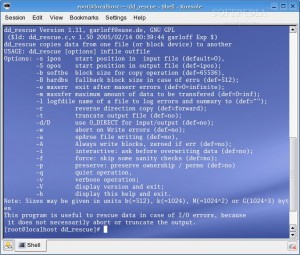
Making a SD card for the Raspberry Pi from an image with ddrescue.

On GNU/Linux : The SD card may be presented on any device like /dev/sdx so use on the Terminal the command lsblk  or sudo fdisk -lu to check.   sudo apt-get install gddrescue xz-utils unxz myimage-raspberry-pi.img.xz sudo ddrescue -D –force myimage-raspberry-pi.img /dev/sdx   On MacOSX : On MacOsx you’ll need a real package handler aka : …

Continue reading

Banana Pi sous Android 4.2.2 et sous GNU/Linux

Pourquoi choisir le Banana Pi aujourd’hui alors que le Raspberry Pi 2 vient de sortir ?? Et bien, la seule bonne raison, c’est l’installation d’Android 4.2.2 ! Qui fonctionne parfaitement avec l’accélération matérielle fonctionelle du Mali 400. Android Mattrix XBMC/KODI Image Pour GNU/Linux, le Banana Pi fonctionne plutôt bien, mais le support du Mali 400 …

Continue reading

Le Raspberry Pi 2 est là !

Le Raspberry Pi 2 est sorti. Un peu par surprise il faut bien l’avouer ! Quadricode ARMv7 900MHz, ce nouveau raspberry pi est beaucoup plus rapide que le précédent B+  monocore ARMv6 700MHz. De 2 à 6 fois plus rapide au niveau des sensations pour les applications sous GNU/Linux ! Iceweasel, le firefox libre, devient …

Continue reading

MIST FPGA based Amiga 500 & Atari STE

Ce projet personnel, initié par Till Harbaum, est la création d’une carte Atari ST à base de FPGA suffisamment simple et abordable pour être réalisée par des hobbyistes. C’est une sorte de “Minimig nouvelle génération” qui apporte les nouveautés suivantes : un composant FPGA de plus grande capacité et la gestion des périphériques USB. Conclusion : …

Continue reading